
A chastity cage support strap is a separate fitting decision, not a shortcut around choosing the right device. Waistbands, Y-shaped straps, and multi-point harnesses can route support in different directions, but their effect depends on the actual connection and how the wearer moves. A product photograph alone cannot establish cage compatibility or comfortable tension. This guide is for adults making a consensual purchase and planning easy removal, regular hygiene breaks, and skin checks.
What a Support Strap Can and Cannot Do
A support accessory may help position a compatible device by transferring some movement to a waistband or another strap route. That is different from changing the dimensions of the cage or base ring. If the ring pinches, the cage sits at an unsuitable angle, or an opening presses against skin, pulling upward can hide the movement while adding pressure at the same contact point.
Use the chastity cage size and fit checklist to assess the device before considering a harness. Evaluate the accessory only after the underlying fit is acceptable. More support does not prove better ventilation, longer comfortable wear, or greater security. A strap also adds surfaces that can rub, retain moisture, or interfere with clothing.
Verify the Attachment Before Ordering
Identify the intended connection
Ask where the accessory is designed to connect: a dedicated attachment, a compatible base-ring arrangement, or another maker-approved point. Record the cage model and variant, connector dimensions, strap width, and which pieces are supplied. An O-ring visible in a harness image is a junction in that harness; it does not establish that every cage can attach to it. Do not improvise a connection through ventilation slots, moving lock parts, or sharp edges.
Trace the route to the release point
With the device off the body, compare the proposed strap route with the lock, removable ring, and other release parts. A strap that covers a keyhole or traps a release component changes the removal procedure. Request a diagram or clear assembled photograph of the exact combination if the listing does not show it. Use iCockCage product support to ask whether the selected accessory fits your specific model, rather than relying on a general claim of universal fit.
Compare Three Catalog Harness Layouts
The following listing details help define questions for the seller. They are component descriptions, not independent load tests, medical findings, or confirmation that a particular cage is compatible. Select the actual color and size variant before comparing dimensions.
| Layout | Details stated in the listing | What to verify |
|---|---|---|
| Y-shaped auxiliary belt | The Trans Pride listing describes elastic webbing, a central O-ring, adjustable lower straps, and multiple snap buttons. | Confirm the adjustment range and intended cage connection; check whether the lower route interferes with release. |
| Four-way letter strap | The listing states a 70 cm resting waistband and 105 cm maximum stretch, detachable snaps, and a 4.4 cm central iron ring. | Ask for usable wearing dimensions and the exact measuring basis. Maximum stretch is not a target waist size. |
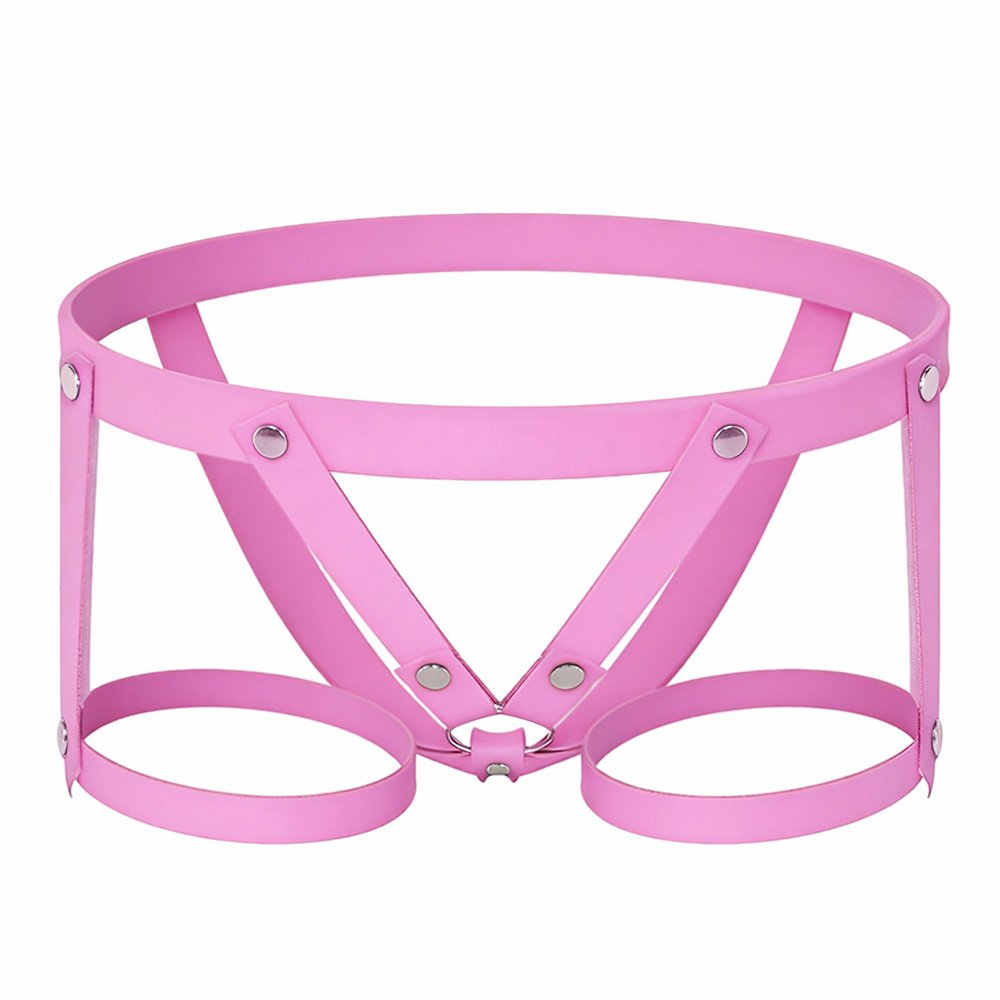
| Four-point elastic belt | The listing describes an 80 cm waistband, two 41 cm thigh loops, an 8 cm base loop, and 14-28 cm V-straps. | Confirm whether each figure is a component length or a loop circumference, and how the selected variant adjusts. |
The Trans Pride elastic adjustable support harness provides a Y-shaped comparison point. The four-way letter waist strap adds detachable branches, while the four-point elastic waist belt includes thigh loops and V-straps. Extra branches mean more adjustment variables and contact points; they should serve a defined routing need. Do not assume a multi-point layout is automatically more comfortable than a simpler one.
Read Elastic Measurements Without Guessing
Measure at the height where the waistband will actually sit, using a flexible tape without compressing the body. Repeat standing and seated, and record the unit and clothing context. For a design with thigh loops, obtain the seller’s measurement method for those loops as well. A waist measurement alone cannot describe the fit of every branch.
Separate three figures: the relaxed component length, the available adjustment range, and a stated maximum extension. They answer different questions. For example, the letter strap listing gives 70 cm resting and 105 cm maximum stretch; those numbers do not establish a recommended 70-105 cm waist range. Likewise, a listed 41 cm thigh-loop figure needs a clear measurement definition before it can be compared with your body.
If the listing omits a usable size range, ask before purchase. Check the returns and exchange policy before opening or trying an item: the published refund policy requires items to be unused and in original packaging. Do not assume a worn accessory will qualify for a return.
Adjust Support Without Creating a New Pressure Point
Establish a baseline before adding the harness
Check the cage independently while removable. Then inspect the accessory off the body for rough seams, bent snaps, damaged webbing, and exposed metal edges. Attach only through the confirmed connection and start with the least tension needed to assess positioning. Avoid stretching the waistband toward its limit or pulling lower straps hard to force the device into place.
Change one adjustment at a time
During a brief, awake trial, note the starting snap positions, then stand, sit, and walk gently. Check whether a strap rolls, a thigh loop shifts, or the device tilts when you sit. Change one setting and compare again so you can identify the source of pressure. Do not continue tightening to eliminate all movement: if support requires uncomfortable compression, reassess the route or accessory choice.
Remove the harness and device for pain, numbness, coldness, unusual discoloration, swelling, or broken skin. Stop rather than trying to balance the pressure with another strap. Seek urgent medical help if removal is difficult or symptoms are severe or persist. There is no universal tension setting or wear duration that makes every combination safe.
Plan Release Access and Clothing Together
Before use, agree on the removal plan and keep the key or other approved release method accessible. The wearer must be able to stop; informed consent is ongoing, and a partner should not restrict access to necessary removal. Practice the release sequence with the device off the body first, including which strap needs to open before the lock can be reached.
Test the intended clothing during a short trial. Waist seams and seated posture can press snaps or a central ring into a new position. A discreet outline is not a reason to accept hidden pressure or blocked release access. Keep initial checks awake and easy to end; do not treat a comfortable standing check as evidence that the same setup is suitable for sleep, exercise, or extended wear.
Maintain the Webbing, Snaps, and Junctions
A harness combines materials: elastic webbing, stitching, snap hardware, and sometimes a separate metal ring. Confirm care instructions for each part. Detach only the pieces designed to detach; an adjustable snap is not permission to dismantle a rivet or other permanent joint. The chastity cage cleaning and drying guide explains why removable components should be inspected and dried separately.
After the permitted cleaning process, allow seams, folded ends, and snap recesses to dry fully before storage or reassembly. Avoid bleach, solvents, heat, or lubricants unless the maker specifically approves them. Compare the relaxed strap shape with its previous condition: persistent elongation, fraying, cracking, loose snaps, or rough hardware are reasons to stop using the accessory and request replacement guidance. A connector that closes audibly is not necessarily undamaged.
FAQ: Chastity Cage Support Straps
Can a support strap correct a poorly fitting chastity cage?
No. A strap may change positioning, but it cannot correct an unsuitable base ring, cage length, or opening. Reassess the device fit instead of using extra tension to disguise pressure or movement.
Does a central O-ring make a waist strap compatible with every cage?
No. Compatibility depends on the intended attachment point, hardware dimensions, strap route, and access to the lock. Ask the seller to confirm the exact cage and strap combination before ordering.
Is the maximum elastic stretch a recommended waist measurement?
No. A maximum stretch figure describes an extension limit stated in the listing, not a comfortable wearing size. Request the usable adjustment range and measuring method for the selected variant.
Are four-way straps always better than a Y-shaped harness?
No. Additional straps introduce more contact areas, fasteners, and adjustment variables. Compare the intended attachment route, movement, removal, and cleaning access rather than choosing by strap count alone.
What should I do if the harness causes numbness or swelling?
Stop use and remove the harness and device promptly. Do not tighten another strap to compensate. Pain, numbness, coldness, unusual discoloration, swelling, or broken skin require attention; seek urgent medical help if removal is difficult or symptoms are severe or persist.