
A product title can call a chastity cage “breathable” while telling you very little about where its openings sit. A perforated front panel, an open framework, and small side vents are different construction choices. The useful buying question is how those openings relate to the covered areas, the base ring, and the clothing you intend to wear.
This guide compares three current iCockCage catalog layouts. It separates visible design details from performance claims so adults making a consensual purchase can ask better questions before ordering. None of these layouts establishes a universally safe wearing duration or removes the need for regular removal and skin observation.
Translate “Breathable” into Specific Design Questions
Treat breathable chastity cage wording as the start of an evaluation. Ask what is open, what remains enclosed, and whether the listing shows the inside of the shell. An attractive front view can hide a substantially closed underside or a broad junction near the ring. An opening that appears large in a cropped photograph may be much smaller once the actual dimensions are known.
Keep the evidence levels separate: a photograph can show an opening; a description can state the intended benefit; actual performance needs evidence under stated conditions. The catalog descriptions reviewed here do not supply measured airflow or moisture test results. Claims about all-day dryness should therefore not become a personal wear-time recommendation.
Map the Openings against the Solid Contact Areas
Trace a possible air path
Look for views of the front, sides, underside, and ring connection. Mark the areas where the shell is open and where it is continuous. Openings on different faces may provide more routes for air exchange than a single isolated opening, but clothing, posture, and contact with the body can obstruct those routes. A front vent alone does not show what happens around the ring.
Count edges as well as holes
More cutouts also mean more boundaries to inspect. Consider whether each edge is accessible for cleaning and whether the internal contour is visible. Large openings do not automatically mean a better fit, and a dense pattern of small holes does not automatically mean better ventilation. Reject roughness or damage rather than trying to compensate by changing how tightly the device sits.
For a meaningful comparison, record four separate observations: vent location, solid-panel location, front-opening shape, and the views still missing. This short record is more useful than ranking two products by hole count.
Compare Three Catalog Ventilation Layouts
The pink lightweight hollow cage is described as a resin design with a multi-vented mesh layout and a front opening. Its catalog photograph shows several front cutouts around a central oval opening. That supports a description of the geometry; it does not establish measured drying performance.
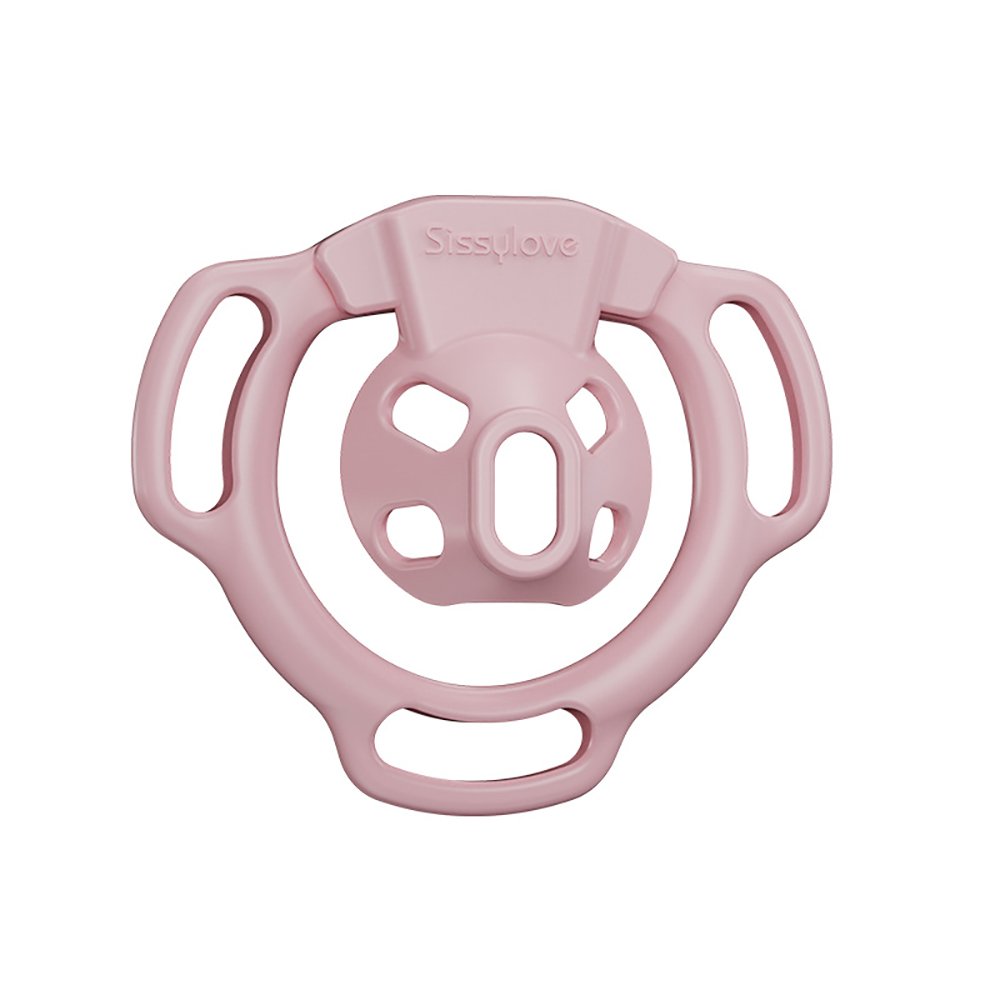
The pink resin model with a honeycomb front panel is described as having a dense micro-vent array and a centered oval opening. The smooth pink resin enclosure with side vents instead emphasizes a rounded shell, subtle side vents, and a front opening. These descriptions identify different layouts without proving which will work best for an individual.
| Catalog layout | Confirmed description or visible detail | Useful follow-up question | Conclusion to avoid |
|---|---|---|---|
| Pink lightweight hollow model | Resin, multiple vents, and a central front opening | Can I see the underside and internal edges? | Several openings guarantee dry skin |
| Pink honeycomb-panel model | Resin, dense front micro-vents, and a centered oval opening | What are the opening dimensions, and how is the inner panel cleaned? | More holes establish more airflow |
| Smooth pink enclosure | Rounded shell, side vents, and a front opening | Where do the side vents end relative to the solid shell? | A smooth exterior proves long-duration comfort |
Read Product Photos without Turning Them into Test Results
Use images to check shape, coverage, and access. Do not estimate weight, material certification, internal smoothness, or exact dimensions from a photograph. Glossy highlights can help reveal contours, but they do not prove that the interior has the same finish. A large base ring in the foreground can also distort your impression of the shell size.
Ask for an inside view when a panel has numerous small openings. Ask for a side view when the front looks highly ventilated. If a front image and the written description leave a material detail unresolved, obtain confirmation rather than filling the gap with an assumption. A photograph of one variant should not be treated as proof of every size option.
Separate a Front Opening from Full Cleaning Access
A front opening is a local feature. Its presence does not show whether all covered surfaces can be inspected or cleaned, nor does it guarantee alignment for every wearer. Smaller vents may be difficult to reach, while larger cutouts may expose more edges that need inspection. Evaluate both access and coverage instead of looking for a single “best” opening shape.
Do not use rinsing through vents as a substitute for removing the device and checking the skin underneath. Follow the maker’s material-specific care instructions; do not infer resistance to heat, solvents, or disinfectants from the word resin. The cleaning and drying checklist explains the separate maintenance steps. Ventilation is one selection factor, not a replacement for that routine.
Assess Fit and Clothing before Extending Use
A ventilated shell cannot correct an unsuitable ring, a pressure point, or an awkward junction. Start with the cage size and fit checklist and the dimensions for the exact variant. Avoid choosing a smaller model simply because the vents look generous. Openings and fit answer different questions.
If the fit and the manufacturer’s instructions allow a trial, keep it brief and removable, with the key immediately accessible. Check ordinary sitting and standing without treating discomfort as something to overcome. Clothing that presses against the openings can change the experience; do not assume that a product’s uncovered appearance predicts how it behaves under trousers.
Use only with informed adult consent and clear communication. Remove promptly for pain, numbness, swelling, unusual discoloration, skin damage, or difficulty urinating. Seek medical help for severe symptoms, symptoms that persist after removal, or inability to remove the device. No vent pattern justifies ignoring warning signs or sets a safe universal maximum duration.
Build a Shortlist around Answerable Questions
Before buying, send a concise request through iCockCage product support: identify the exact model and variant, request the missing viewing angles, and ask for the dimensions of the enclosure and relevant openings. Request the material specification and care instructions if they are not stated. These are questions the seller can answer more clearly than “Will this stay comfortable all day?”
Keep a shortlist with three columns: confirmed feature, unresolved question, and reason it matters to you. For example, “front cutouts visible; underside unknown; need to assess cleaning access” is a useful entry. “Breathable, therefore suitable for continuous wear” is not. Remove a candidate from consideration if an essential fit or care question remains unresolved.
Check the current returns policy before ordering, especially the conditions for intimate products and any restrictions after opening or use. Preserve the listing and the seller’s answers. Choose on confirmed construction and manageable care needs, while keeping removal and skin observation part of the decision.
FAQ: Chastity Cage Ventilation and Opening Design
Does a chastity cage with more holes always ventilate better?
No. Hole count alone does not establish airflow. Opening position, remaining solid coverage, contact with the body, posture, and clothing can all affect whether air reaches a covered area.
Does a front opening mean I can clean the device without removing it?
No. A front opening provides local access, not proof that every covered surface is reachable. Remove the device for cleaning and skin checks, and follow its material-specific care instructions.
Are honeycomb vents better than side vents?
Neither layout is universally better. Honeycomb and side-vent designs place openings differently. Compare the full enclosure, interior access, exact dimensions, and fit instead of assuming a performance ranking from the pattern.
Does breathable wording establish a safe wearing duration?
No. Breathable wording does not establish a safe wearing duration or guarantee dry skin. Keep removal available, check the skin, and stop promptly if pain, numbness, swelling, unusual discoloration, skin damage, or difficulty urinating occurs.