
“Chastity belt” can describe a complete restraint or a separate harness that supports a cage bought elsewhere. The photographs may look similar even when the included parts, connection points, and release method are completely different. Before comparing materials or style, read the listing as an assembly plan: identify what arrives, what it attaches to, how it is adjusted, and how the wearer can stop. This guide is for adults making a consensual purchase with an accessible removal plan.
Read the Product Title as a Starting Point
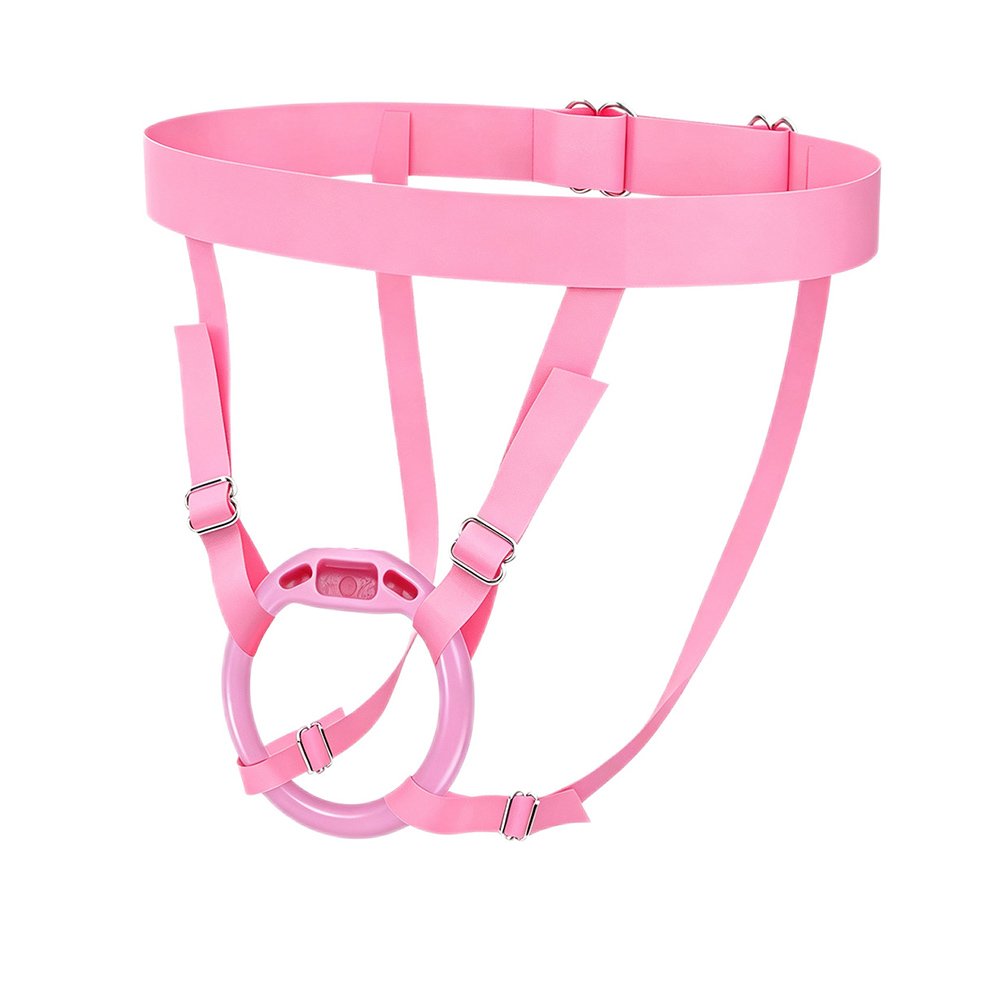
Titles are useful for finding a category, but they rarely define a complete setup. Look for words such as “accessory,” “auxiliary,” “harness,” or “belt” and then read the first paragraph and specifications. The elastic silicone harness listing calls itself an auxiliary belt base; the four-way adjustable belt listing describes a belt system and separately notes that its pictured base ring is not included. These are different buying decisions from a cage that includes its own ring and lock.
Make a three-column note before checkout: “included,” “shown but excluded,” and “must be confirmed.” Put the cage body, base ring, lock, keys, straps, buckles, and any shield in one of those columns. If a listing does not say whether a part is included, treat that part as unconfirmed and ask the seller rather than inferring from the gallery.
Separate Complete Devices from Auxiliary Harnesses
Accessory language changes the assembly
An auxiliary harness supplies support or routing; it does not automatically supply the body-contact cage. The silicone model is described as soft, waterproof, sweat-resistant, non-sticky, and continuously adjustable with a slider buckle. Those are properties of the harness. They do not establish which cage attaches to it, whether a ring is supplied, or whether a lock remains accessible.
A complete product can still require careful compatibility checks. The lockable leather and metal harness is described with a black leather belt, a polished metal shield, a breathable metal mesh cage, chains, and two padlock positions. Because the listing describes a combined structure, verify the exact delivered configuration, adjustment holes, and release steps rather than comparing it directly with a support-only belt.
Map the Compatibility Chain
Every interface needs a known dimension
Write the connection as a chain rather than a broad claim: belt to ring, ring to cage, cage to lock, and lock to release method. Every link needs a known interface. A belt may use straps, snaps, buckles, a ring, or a shield. A cage may need a particular ring diameter or a matching connector. A lock may need clearance for a key or padlock. If one link is unknown, the setup is not ready to order.
Send the seller the exact model names and product URLs, your measured ring or attachment dimensions, and a photograph of the cage connection if needed. Ask for a direct compatibility answer and any required adapter. Do not route a strap through ventilation holes, around a moving hinge, or across a lock simply because it fits in a photograph.
Measure the Body Route, Not Just the Waist
Measure where the main belt will sit and where each lower strap or ring will route, using the seller’s stated method. Record standing and seated measurements without pulling a strap tight. A waist measurement cannot describe a thigh loop, crotch route, or shield position. For a separate cage, record the ring and cage dimensions independently.
Do not convert a maximum adjustment position into a recommended size. A buckle can close while still placing pressure in the wrong location. Compare the relaxed position, the available adjustment range, the hardware width, and the space needed for clothing. If the seller does not provide a usable range, ask before purchase. Use the size and fit checklist for body-contact measurements.
Inspect Hardware and Contact Surfaces
Check buckles, snaps, rings, shields, padlock points, leather edges, silicone transitions, and metal mesh before any fitting. Look for rough edges, cracked or peeling material, distorted holes, sharp chain ends, and fasteners that do not seat normally. Do not test a suspected edge against bare skin. Photograph an issue and keep the item out of use while you contact the seller.
Materials also change care. Silicone, leather, polished metal, mesh, and chains should not automatically receive the same cleaner or soaking method. The cleaning and drying guide explains why components and joints need separate attention. Ask for maker-approved care instructions, and never use heat, solvent, glue, or a home coating to solve a fit or surface problem.
Design the Release Plan Before the Lock
A complete setup needs a release path that works with every layer. Identify whether the belt opens at a buckle, snap, padlock, or another connector, and whether a cage lock can still be reached. Keep the required key or release method available to the wearer. Consent remains active during use; a partner should not remove access to necessary release.
Assemble the entire setup off the body, then operate the normal release sequence without force. If the cage, ring, shield, belt, and lock cannot separate in the intended order, stop and ask the seller. Do not rely on a spare part from another model until compatibility is confirmed. “Two padlocks” describes hardware positions, not a guarantee that an emergency removal will be simple.
Check Returns Before You Try It
Open the returns and exchange policy before cleaning or wearing a new belt. The published policy says returned products must be unused and in original packaging, and it describes contacting the seller for exchanges. That makes an off-body inspection especially important: confirm the variant, included parts, and mechanism before changing the item’s condition.
If a part is missing or the listing does not match the order, document the complete set, model, order number, and photographs. Use customer support to ask for a remedy. Do not assemble an uncertain combination just to see whether it works; that can obscure the original issue and may affect return eligibility.
Make a Brief, Removable Trial
After compatibility, inspection, and cleaning checks pass, make the first trial brief, awake, and easy to stop. Begin with minimal adjustment and check posture, seated pressure, strap rolling, skin contact, and access to the release. A belt that shifts is a fit question; tightening until movement disappears can create a pressure problem.
Remove promptly for pain, numbness, coldness, unusual discoloration, swelling, or broken skin. Seek urgent medical help if removal is difficult or symptoms are severe or persist. Neither an attractive complete harness nor a confirmed connection establishes an all-day wear limit.
| Listing type | Details stated by the listing | Verify before purchase |
|---|---|---|
| Four-way adjustable belt | Four cross-positioning straps with metal adjustment buckles; pictured base ring excluded. | Confirm the separate ring and cage, adjustment range, and attachment direction. |
| Elastic silicone auxiliary belt | Soft silicone auxiliary base with an infinitely adjustable slider; cage shown for display only. | Confirm the cage model, contact surfaces, cleaning instructions, and lock clearance. |
| Leather and metal lockable harness | Black leather harness, metal shield, breathable mesh cage, chains, and two padlock positions stated in the listing. | Confirm delivered configuration, adjustment holes, padlock release plan, and metal contact condition. |
Compare Three Listing Types
The table compares listing facts with the questions they leave open. It is not a performance ranking. “Anti-escape,” “skin-friendly,” “breathable,” or “secure” are seller descriptions, not proof of a personal fit or a safe wear duration.
FAQ: Chastity Belt Listing Compatibility
Does a chastity belt product always include the cage or base ring?
No. The four-way adjustable anti-escape listing explicitly says the base ring shown in its images is for demonstration and is not included. Read the included-parts statement for the exact variant before ordering.
Is a silicone auxiliary belt a complete chastity device?
No. The silicone harness listing describes an auxiliary belt base and says the cage shown is for display only and is not included. Treat it as a support component that needs a separately verified compatible cage.
Are two padlocks the same as a complete release plan?
No. The lockable leather harness listing describes two padlock positions, but the wearer still needs an agreed, accessible release method and a way to remove the complete setup without force.
Can I combine parts from different belt listings?
Do not assume compatibility from similar photographs. Confirm the attachment points, ring or shield dimensions, strap route, and lock clearance with the seller for the exact cage and harness combination.
How should I test a new belt setup?
Assemble it off the body, check every connection and release point, then make a brief, awake, consensual trial with minimal tension. Stop for pain, numbness, coldness, discoloration, swelling, or damaged skin.